Bullmastiff Health Concerns and Symptoms to Watch For
Bullmastiffs are powerful, intelligent, and famously affectionate companions, but like many large and giant breeds, they’re prone to a specific set of health issues. Understanding these common Bullmastiff health concerns can help you spot early symptoms, plan for preventive care, and keep your gentle giant comfortable throughout their life.
Below are the conditions veterinarians discuss most often with Bullmastiff owners, what causes them, what symptoms to watch for, and how each condition is typically managed.
Hip Dysplasia in Bullmastiffs
Hip dysplasia is one of the most common large-breed orthopedic problems, and Bullmastiffs are genetically predisposed due to their size, rapid growth rate as puppies, and the heavy load placed on their joints.
In hip dysplasia, the hip joint doesn’t develop normally. Instead of fitting smoothly into the socket, the joint becomes loose. Over time, this leads to:
- chronic inflammation
- cartilage wear
- pain and stiffness
A Bullmastiff with hip dysplasia may walk more slowly, hesitate on stairs, rise stiffly after naps, or shift their weight to the front legs. Some dogs “bunny hop” when running to reduce strain on their hips.
Mild cases often respond well to lifestyle changes:
- Weight control (the #1 most effective management tool)
- Joint supplements (omega-3s, glucosamine, chondroitin)
- Low-impact exercise (swimming, controlled walks)
- Anti-inflammatory medication during flare-ups
Severe dysplasia may require surgical correction, especially when mobility or quality of life is affected. Early evaluation and consistent weight management dramatically help Bullmastiffs stay active and comfortable.
Because hip dysplasia can progress into canine osteoarthritis (OA), a chronic joint disease that affects mobility and comfort, many Bullmastiffs eventually experience stiffness, pain, and slower movement as they age. OA is extremely common in large breeds, and managing it often requires long-term care.
At Gallant, we are currently researching whether stem cell therapy—specifically donor-derived mesenchymal stromal cells collected during routine spay procedures—may help support joint health by reducing inflammation and promoting a healthier joint environment. While still investigational, this work represents a promising area of future support for dogs living with osteoarthritis.
Be Part of What’s Next in Pet Health
Gallant is advancing ready-to-use stem cell therapies designed to give pets better treatment options tomorrow. Learn how you can get involved.
Hypothyroidism
Hypothyroidism occurs when the thyroid gland doesn’t produce enough hormones to regulate the dog’s metabolism. Large breeds, including Bullmastiffs, are more likely to develop this condition, often between ages 2 and 6.
Because the thyroid controls energy levels, metabolism, and skin health, a deficiency can cause several gradual changes.
Common signs include:
- unexplained weight gain
- thinning coat or chronic skin infections
- lethargy or “slowing down”
- reduced tolerance to cold
- behavioral changes (such as irritability or anxiety)
A simple blood test can confirm hypothyroidism. Treatment typically involves a daily thyroid hormone supplement to restore normal hormone levels. Most Bullmastiffs improve noticeably within a few weeks and live healthy lives with consistent medication and monitoring.
If left untreated, hypothyroidism can lead to heart issues, fertility problems, and severe skin infections. So early testing is important if you notice subtle changes in your dog’s behavior or coat.
Bullmastiff Eye Problems
Bullmastiffs are more prone to entropion because of their facial structure—specifically, loose facial skin, heavy brows, and deep-set eyes. In entropion, the eyelid rolls inward, causing eyelashes or facial hair to rub against the cornea.
This constant irritation can result in:
- redness and squinting
- watery eyes or tear staining
- eye rubbing with paws or on furniture
- corneal ulcers and scarring
Entropion is typically corrected with surgery. In puppies, temporary “tacking” procedures can help hold the eyelids in place until the face fully matures. Adults usually undergo a more permanent corrective surgery.
ACL Tears (Cranial Cruciate Ligament Injuries)
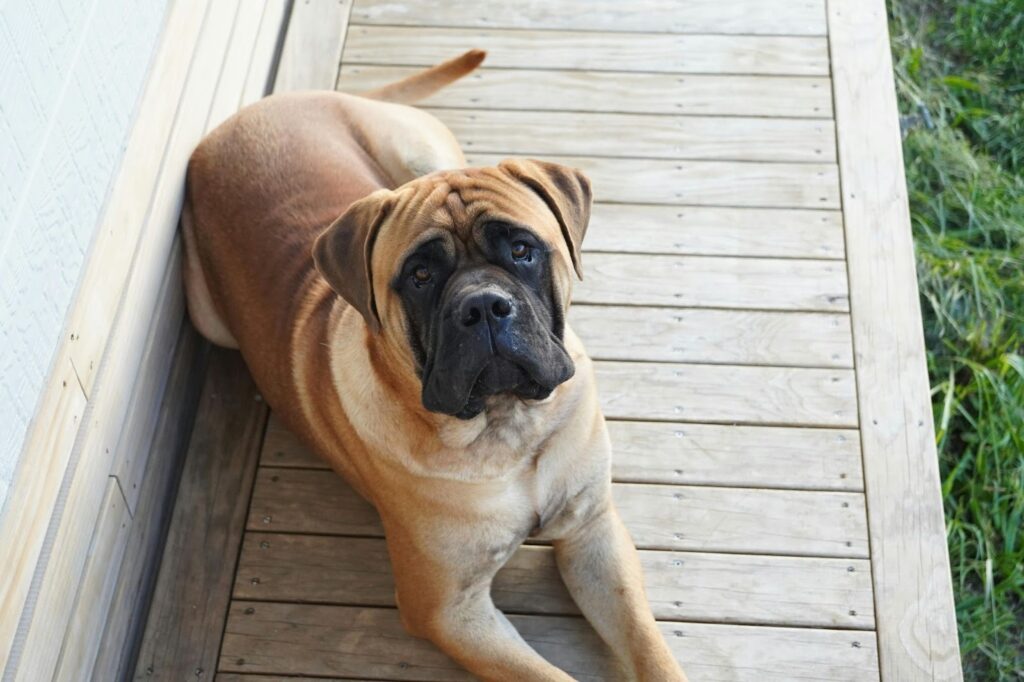
Bullmastiffs are large, muscular dogs, and that weight puts extra strain on their knees. The most common knee injury in giant breeds is a cranial cruciate ligament (CCL) tear, often mistakenly called an ACL tear.
This ligament helps stabilize the knee joint. When it tears, the knee becomes unstable, painful, and swollen.
Common causes in Bullmastiffs:
- sudden jumps or twists
- slipping on smooth floors
- carrying too much weight
- weakened ligaments due to genetics
Symptoms to watch for:
A Bullmastiff with a CCL injury may suddenly refuse to put weight on one leg, limp severely, or sit with the injured leg extended outward.
In giant breeds, surgery is almost always required to restore stability. Without surgical stabilization, the knee is likely to develop severe arthritis or tear the ligament in the opposite leg due to overcompensation.
Recovery takes 6–8 weeks of restricted activity, followed by a gradual return to exercise. Weight management and controlled exercise dramatically reduce long-term joint strain.
Hemangiosarcoma
Hemangiosarcoma is an aggressive cancer of blood vessel cells and is unfortunately more common in large and giant breeds like the Bullmastiff. Because these tumors often grow internally—in the spleen, liver, or heart—they’re difficult to detect in early stages.
When symptoms do appear, they tend to be sudden:
- weakness or collapse
- pale gums
- rapid breathing
- swollen abdomen
- sudden loss of stamina
Hemangiosarcoma often goes unnoticed until a tumor ruptures, causing internal bleeding. By that point, the condition is already advanced.
What owners can do:
- Ask breeders about family history
- Prioritize regular wellness exams
- Report sudden behavior changes or fatigue
While there is currently no cure, early detection may help improve comfort and provide more options. Bullmastiffs are loyal, affectionate, and deeply devoted companions. By understanding the most common health problems in Bullmastiffs and the early signs associated with each one, you can take simple steps to support your dog’s comfort, mobility, and quality of life.